
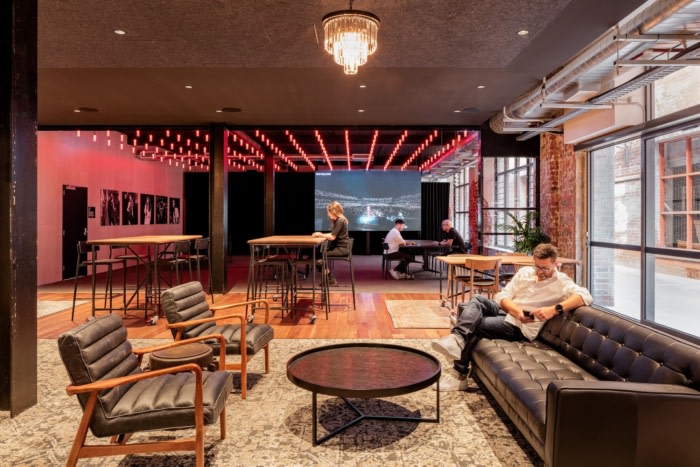
I still remember the first time I walked into a space that made me forget where I was.
It wasn’t just the lighting. It wasn’t just the music drifting in from somewhere unseen. It was the way every single detail — from the scent in the air to the curve of the walls — felt intentional. Immersive. Almost cinematic.
You might not know this, but experiences like that don’t happen by accident.
Behind the scenes, there’s an entire world of creatives, architects, engineers, storytellers, and strategists working together to design those moments. And that world is driven by one powerful force: themed entertainment design companies.
They’re not just building theme parks. They’re shaping how we experience retail spaces, museums, resorts, branded attractions, and even entire cities. And honestly, once you start noticing their influence, you can’t unsee it.
Table of Contents
It’s Not Just “Design.” It’s Storytelling in Physical Form.
When people hear the phrase “themed entertainment,” they usually picture roller coasters or amusement parks. Fair enough. That’s the obvious example.
But the field has evolved far beyond that.
Today’s themed spaces are about narrative immersion. Whether it’s a museum exhibit that feels like stepping into another century, a hotel that transports you into a fictional universe, or a retail flagship store that feels more like an art installation than a shop — it’s all storytelling.
The difference is that the story isn’t on a screen. It’s around you.
Themed entertainment design companies specialize in what’s often called “experiential design.” That means every touchpoint — spatial layout, materials, lighting, digital integration, soundscapes — supports a cohesive emotional journey.
It’s not decoration. It’s choreography.
And here’s the fascinating part: most visitors don’t consciously notice it. They just feel it.
Why Experience Has Become the New Currency
Let’s be honest. We live in a world drowning in digital content. Streaming services, social media, endless scrolling — it’s constant.
So when people leave their homes, they want something more than functional. They want memorable.
Brands have caught on.
A retail store can’t survive on product alone anymore. A museum can’t rely solely on static displays. Resorts compete not just on luxury, but on how unforgettable the stay feels.
That’s where themed entertainment design companies step in. They help businesses answer a critical question: What will people remember about this place?
Because memory is currency now.
A well-designed immersive attraction doesn’t just entertain. It sparks Instagram shares, word-of-mouth buzz, repeat visits, and emotional loyalty. And those outcomes aren’t accidental — they’re engineered.
The Blend of Art and Engineering (It’s Wildly Complex)
From the outside, immersive environments feel magical.
From the inside? They’re complex machines.
Designing a themed attraction requires coordination between:
- Creative directors
- Concept artists
- Architects
- Structural engineers
- AV specialists
- Fabricators
- Show control programmers
- Project managers
It’s a multidisciplinary ecosystem. Creative vision meets technical precision.
And the stakes are high. When you’re building a large-scale entertainment destination, timelines are tight, budgets are significant, and guest expectations are sky-high.
I was surprised to learn how much early planning goes into even the smallest experiential element. A seemingly simple interactive installation may require months of prototyping and systems integration testing before it ever opens to the public.
That seamless “wow” moment you experience? It’s the result of relentless behind-the-scenes problem solving.
Immersive Design Is Expanding Beyond Theme Parks
Here’s where things get really interesting.
The influence of themed entertainment design companies is spreading far beyond traditional amusement environments.
We’re seeing their work in:
- Branded pop-up experiences
- Immersive art exhibitions
- Cultural heritage centers
- Sports arenas
- Cruise ships
- High-end retail environments
- Corporate innovation centers
Even real estate developers are incorporating narrative-driven spatial concepts into mixed-use developments.
Why? Because people crave connection.
A space that tells a story holds attention longer. It feels purposeful. It encourages exploration. And in a competitive market, that emotional differentiation matters.
This shift has elevated experiential design from niche specialty to strategic necessity.
Technology Has Changed the Game (But It’s Not About Gadgets)
Virtual reality, projection mapping, interactive sensors, AI-driven personalization — technology has dramatically expanded what’s possible in immersive spaces.
But here’s something professionals in the industry will tell you quietly: technology alone doesn’t create magic.
Story does.
The most successful themed environments don’t overwhelm guests with flashy effects. Instead, they use technology as a supporting actor — subtle, integrated, purposeful.
When done right, you don’t think about the screens or the programming. You just feel transported.
That restraint is often what separates experienced themed entertainment design companies from inexperienced imitators. It’s easy to add tech. It’s harder to integrate it invisibly.
The Economics Behind Immersion
Let’s talk business for a moment.
Immersive destinations drive:
- Longer dwell times
- Higher per-guest spending
- Increased repeat visitation
- Stronger brand loyalty
Those metrics matter to investors and operators.
A well-designed attraction can extend guest stay duration by hours. In hospitality or retail contexts, that translates directly into revenue. In cultural institutions, it can translate into increased memberships and donor support.
There’s also something less tangible but equally powerful: reputation.
Cities and regions that invest in world-class immersive environments often become tourism magnets. One standout attraction can shift perception and economic momentum.
It’s strategic placemaking at a high level.
The Human Element: Why It Still Matters Most
For all the engineering sophistication, the heart of themed entertainment is still human emotion.
Joy. Curiosity. Wonder. Nostalgia.
Designers in this field study behavioral psychology, crowd flow dynamics, sensory perception, and narrative pacing. They think about how a guest will feel at minute one, minute ten, and minute ninety.
Will there be surprise?
Will there be relief?
Will there be discovery?
These emotional beats are mapped almost like scenes in a film.
And when they land correctly, the result is something rare in modern life: full attention.
No scrolling. No multitasking. Just presence.
That’s powerful.
Choosing the Right Partner in Experiential Development
For organizations considering immersive development, selecting the right design partner isn’t just a creative decision — it’s strategic.
The most respected themed entertainment design companies combine vision with operational realism. They understand safety regulations, fabrication logistics, international supply chains, and long-term maintenance requirements.
They also know how to protect the integrity of a concept from early ideation through final execution.
A good partner asks difficult questions. They challenge assumptions. They align creative ambition with budget reality. And perhaps most importantly, they listen.
Because immersive environments only work when they feel authentic — to the brand, to the location, and to the audience.
What the Future Might Look Like
If current trends continue, immersive experiences will become more personalized and adaptive.
Spaces may respond dynamically to guest behavior. Attractions may evolve seasonally without major rebuilds. Data analytics could influence spatial storytelling in real time.
At the same time, there’s a growing demand for sustainability. Materials, energy systems, and lifecycle planning are becoming central to design conversations. The future of themed entertainment won’t just be immersive — it will need to be responsible.
And that adds another layer of complexity to an already intricate field.
But if there’s one thing this industry has proven, it’s adaptability.
Final Thoughts: Why This Matters More Than You Think
We often talk about architecture, technology, branding, and tourism as separate conversations.
In reality, they’re converging.
Themed entertainment design companies sit right at that intersection — blending creativity, commerce, culture, and engineering into physical experiences that shape how we remember places.
And maybe that’s the part that sticks with me most.
Long after the lights dim and the music fades, what we carry forward are moments — the gasp when a room transforms, the quiet awe in a museum gallery, the laughter echoing through a carefully designed attraction.
Those moments don’t just happen.
They’re imagined. Designed. Engineered. Tested. Refined.
Then, finally, shared.
Next time you step into a space that feels almost cinematic — where every detail seems to pull you deeper into a story — pause for a second.